Sex Doll News: September 2026 Weight & Material Updates
On this page
Dolls Review · News / 01September 2026 edition
Lighter bodies. More attention to the details.
September’s sex doll news puts everyday handling in focus. TAYU and SEDOLL announced lighter TPE constructions, while new reviews explored Irontech’s larger bodies and MD Doll’s softer materials.
Here are four developments worth understanding: what changed, where the figures come from, and what still needs an owner’s experience to settle.
Research checked 6 October 2026 · Window: 6 September–6 October · Manufacturer announcements and attributed retailer reviews. This is a news digest, not our own hands-on test.
01 / TAYU NOVA · New September announcement
TAYU NOVA brings weight reduction to its next generation
TAYU’s September update combines a lighter NOVA construction with revised internal layering and finish. For the NOVA 153E, the manufacturer compares a standard reference of 41 kg with 25 kg after weight reduction.
41 kgSTANDARD REFERENCE
25 kgREDUCED REFERENCE
−16 kgPUBLISHED DIFFERENCE
That is approximately 39% less weight; TAYU markets it as 40%. The update also introduces NOVA Breast 2.0, a three-layer construction intended to improve filling containment and shape retention. Ultra Realistic body painting becomes the standard NOVA finish.
For someone who likes TPE but finds a full-size body difficult to handle, the reduced mass is the practical attraction. How the lighter version feels alongside the standard one still deserves a direct comparison.
02 / SEDOLL · Announced 24 September
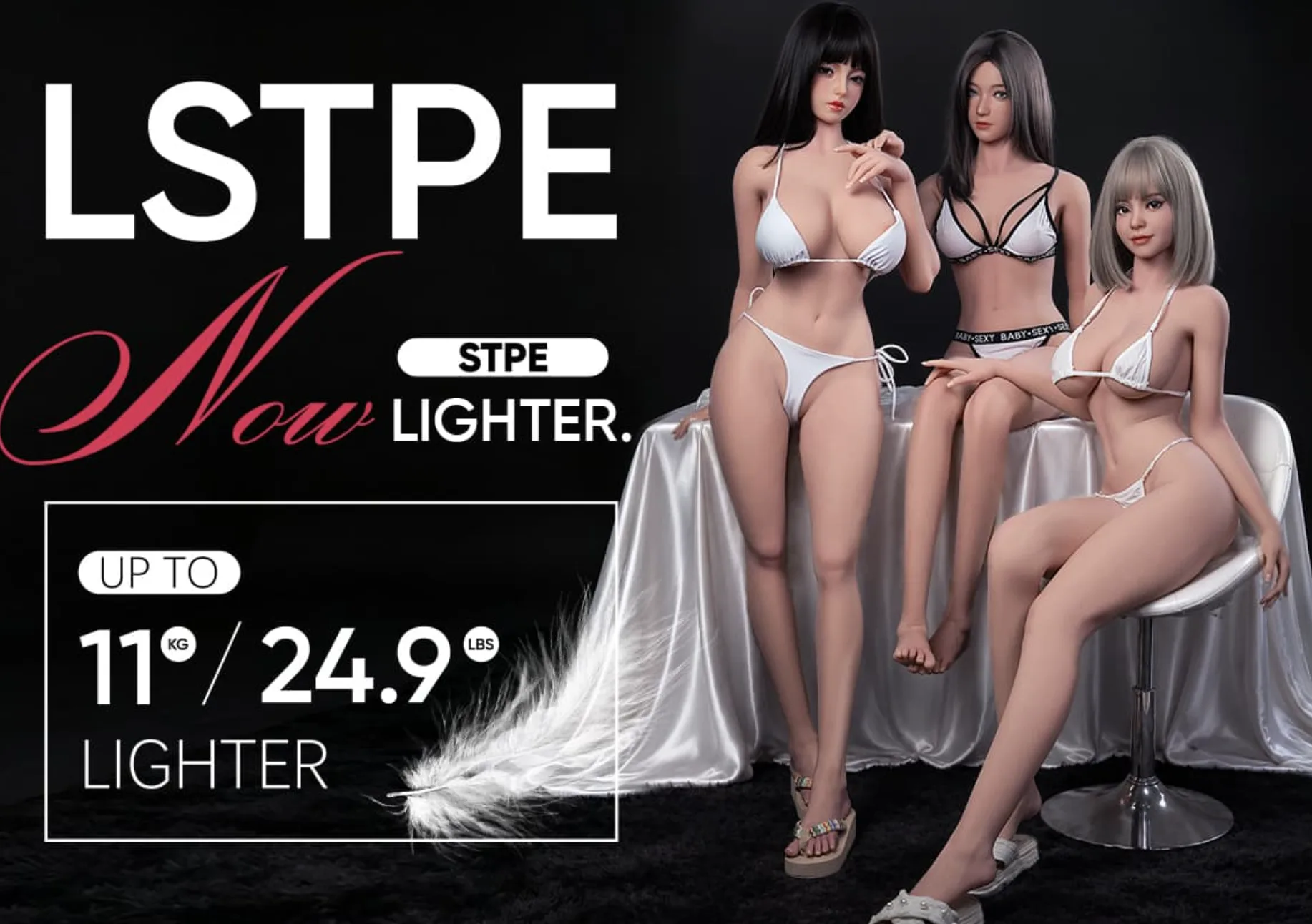
SEDOLL LSTPE offers three different weight reductions
SEDOLL’s LSTPE option adds a lightweight internal foam core to selected STPE bodies. It is a construction change rather than a completely new outer material.
The difference is strongly model-dependent. The 161F’s reduction is considerably smaller than the other two, so the “up to 11 kg” headline should not be applied to every body.
LSTPE is a paid upgrade. SEDOLL says weight variation is controlled within 5%. At announcement, its confirmed silicone-head colour match was Light Tan, with other combinations still being tested.
SEDOLL LSTPE photograph. Click to enlarge.
03 / IRONTECH · September review of an existing model
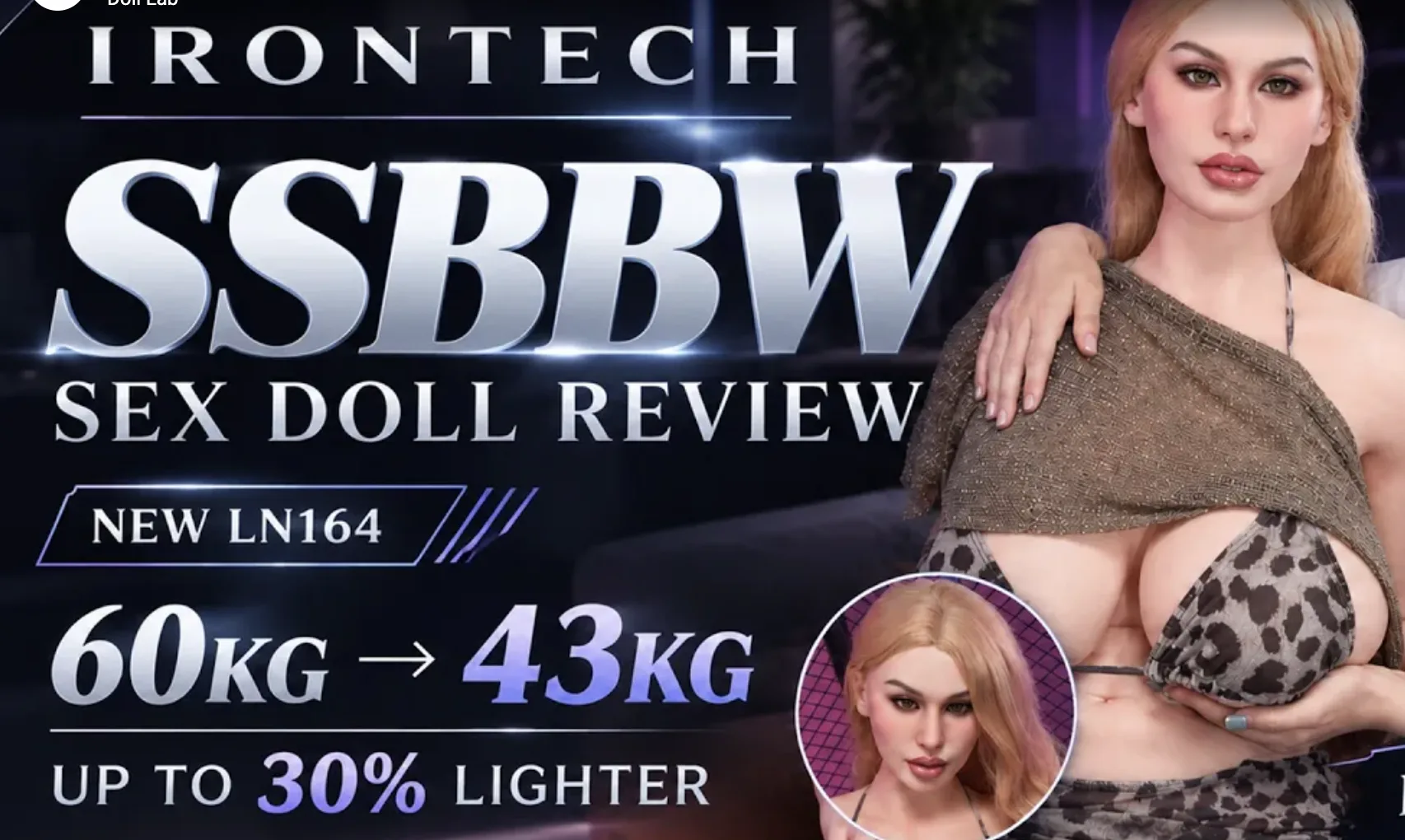
Irontech’s Pearl review puts a larger body in perspective
DollLab’s September 9 review examined the Pearl / LN164 configuration, describing a reduction from roughly 60 kg to 43 kg.
A difference of about 17 kg matters when moving or dressing a doll. Nevertheless, 43 kg is still a substantial load. Buyers need to consider their own lifting ability, room layout and storage arrangements alongside the improvement.
This is fresh review coverage, not a September launch. Irontech had already discussed the 164LN’s reduced weight in August, noting that the final figure depends on options and configuration.
Irontech Pearl photograph. Click to enlarge.
04 / MD DOLL · September review of existing technology
MD Doll’s Bionic Skin keeps softness in the conversation
DollLab’s September 16 coverage focused on Bionic Skin and the Soft Skeleton, particularly material elasticity and the effort required to change poses.
The review gives around 37 kg for the standard 166 cm configuration. The tested upgrades can affect the finished weight, so that number should not be assumed to describe every version. Possible oiling and the associated maintenance are also identified as a trade-off.
Bionic Skin was already appearing in owner reports in July. September added another assessment rather than establishing a new launch date.
MD Doll photograph. Click to enlarge.
The next useful comparison is the complete configuration
Lower reference weights make an encouraging headline. The comparison becomes useful when the body, head, material, internal options and weighing conditions are all identified.
In the next round of coverage, I’ll be looking for owners weighing complete configurations, comparing standard and reduced versions, and reporting how the materials behave after months of dressing, cleaning and posing.
Editorial scope: selected developments and reviews checked during this research window, not an exhaustive market survey. Manufacturer claims and retailer observations are identified separately. Original research URLs are retained in the editorial record.